Originally published April 2020 · Last updated September 2026
Guangzhou is one of the largest clothing distribution centres in the world, and the wholesale district around Guangzhou Railway Station is where most first-time buyers begin. This guide is written from inside the trade rather than from a hotel room: we have worked in the Guangzhou clothing business since 2009, we develop and ship garments for brands in the US, Europe and Australia, and our team walks these buildings most months to buy fabric and trims for client orders.
What follows is an honest breakdown of the market areas that matter, who each one actually suits, and — just as importantly — what the markets cannot do for someone who intends to sell their own designs.
If you are a reseller looking for ready-made stock at a good price, the markets will serve you well — and if you would rather have someone on the ground buy on your behalf, that is something we do. If you are building a label you intend to own, start with the section on private label manufacturing and read the warnings before you book flights.
| Market area | Best for | Typical minimum | Suits a brand owner? |
|---|---|---|---|
| Zhanxi Road area (站西路) | Streetwear, high-street menswear, export casual wear, leather and outerwear | Varies; many stalls sell singles at retail prices | Partly — best for trend reading and reference, not for reorders |
| Baima and the station front (站前路 / 站南路) | Mid-to-high-end womenswear, mature fashion, knitwear and lingerie | Around 30–100 pcs | Partly — useful for fit and price benchmarking |
| Shisanhang area (十三行) | Fast fashion and trend womenswear; original design on the upper floors | Often 5–10 pcs per style and colour | No — trends only, no development |
| Shahe area (沙河) | Cheapest bulk basics, T-shirts, denim, streetwear, plus the online-batch buildings | 50–200 pcs | No — price-led, thin quality control |
| Zhongshan Ba Road (中山八路) | Childrenswear, from baby to teen, across a cluster of small markets | Varies by stall; small lots are normal | Yes if you are building a kids’ line — it is the specialist area |
| Xintang International Denim City (新塘国际牛仔城) | Denim only — jeans, jackets, skirts | Bulk, by the dozen or more | Yes for a denim brand; it is about an hour from the railway station district |
| Stocklot markets (石井 / 昌岗 / 伟国) | Surplus and clearance stock, often by weight | Varies | No — leftovers, not a supply chain |
The pattern is worth noticing. The markets that are easy to buy from are the ones that sell finished goods somebody else designed, and the markets that are genuinely useful to a brand are the ones selling materials rather than garments.
Most buyers hear the buildings by name long before they hear the areas. This table maps the names — Kindo, Huimei, Baima, New China Plaza and the rest — to the seven areas covered in this guide, so you can turn a list of names into a route instead of a random walk.
| Market | Area | Known for | Suits a brand owner? |
|---|---|---|---|
| Kairongdu Clothing Wholesale Center (凯荣都服装批发中心) | Zhanxi Road area (站西路) | The foreign-order building — export wholesale and made-to-order, with stalls mixed across floors | Partly — small quantities are possible but cost more and are often made to order, with rush orders in about a week |
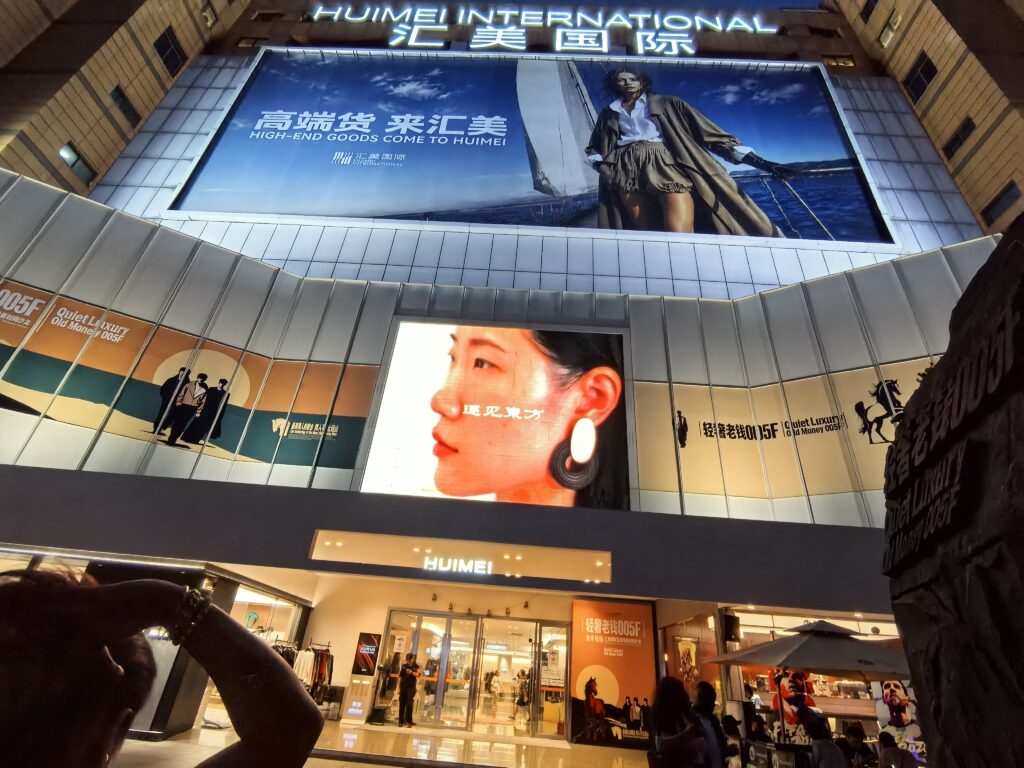
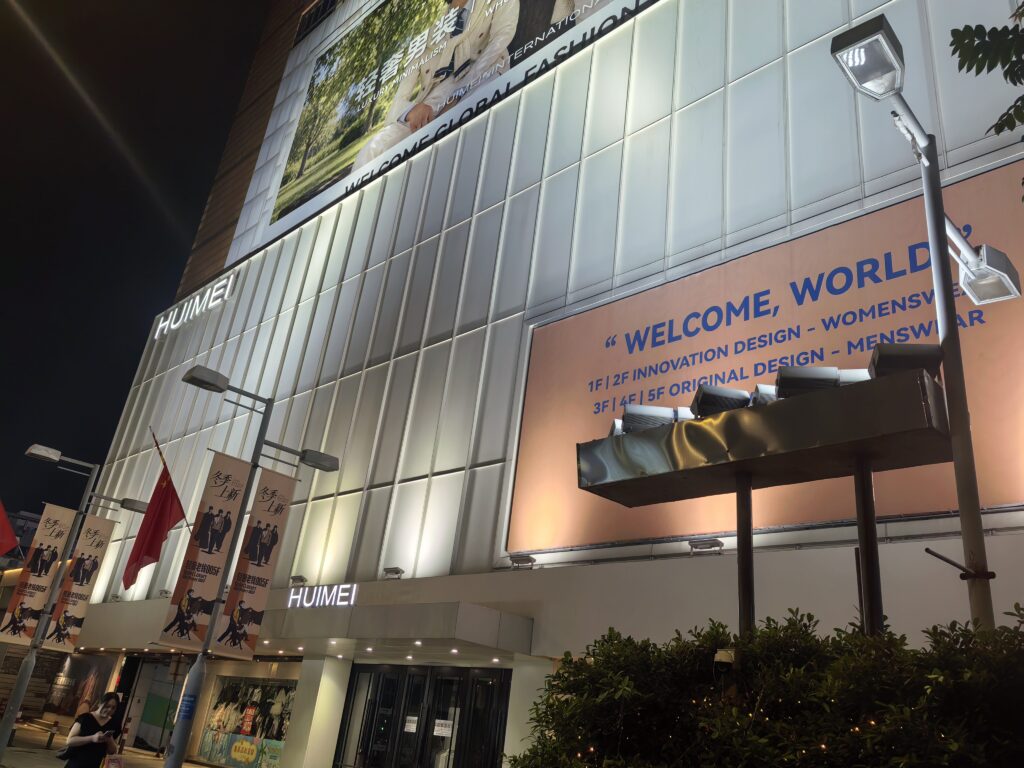
| Huimei International (汇美国际) | Zhanxi Road area (站西路) | Young, trend-led womenswear and menswear in Japanese, Korean and Hong Kong styles; private-label brands on the ground floor | Partly — good for reading trends and for colour, style and size splits at wholesale price |
| UUS International Garment City (UUS国际服装城) | Zhanxi Road area (站西路) | Higher-grade womenswear in much the same styles as Huimei, in a building rebuilt from the old Kowloon Shoe City | Partly — a larger version of Huimei; pick one and go deep rather than rush through both |
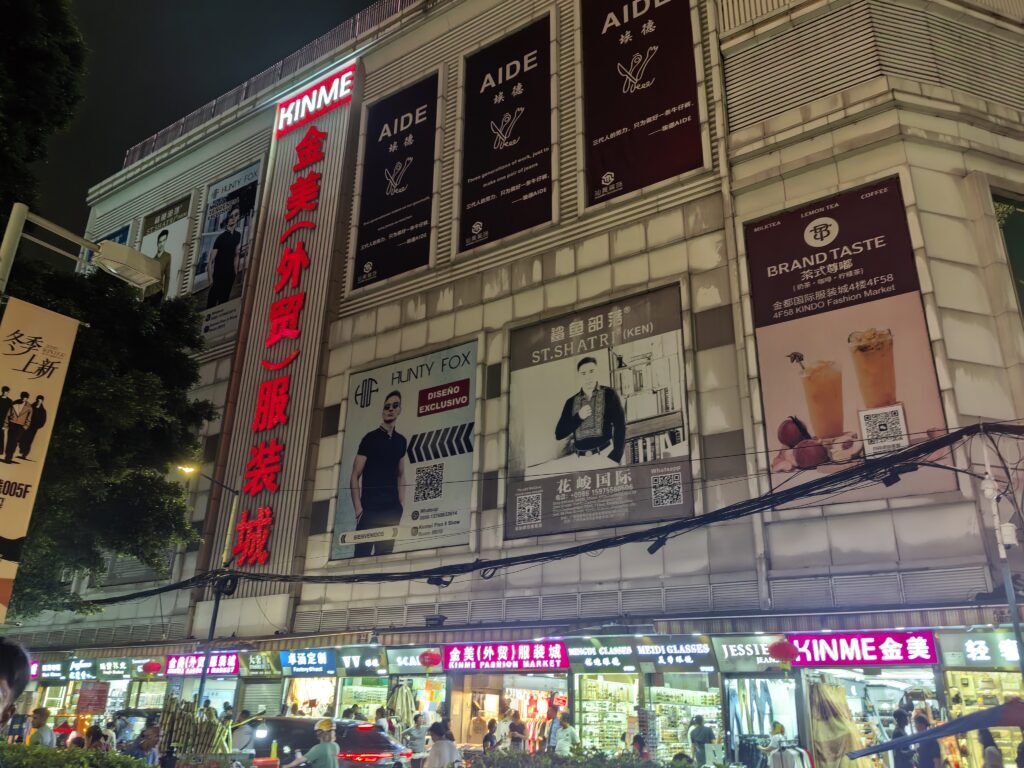
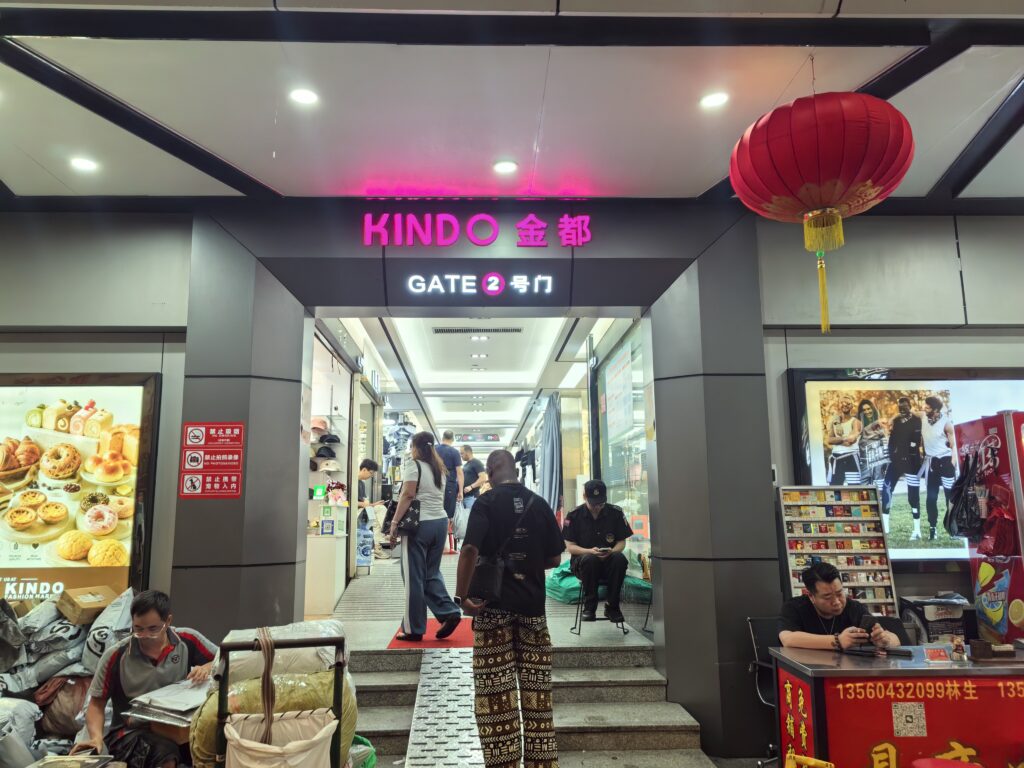
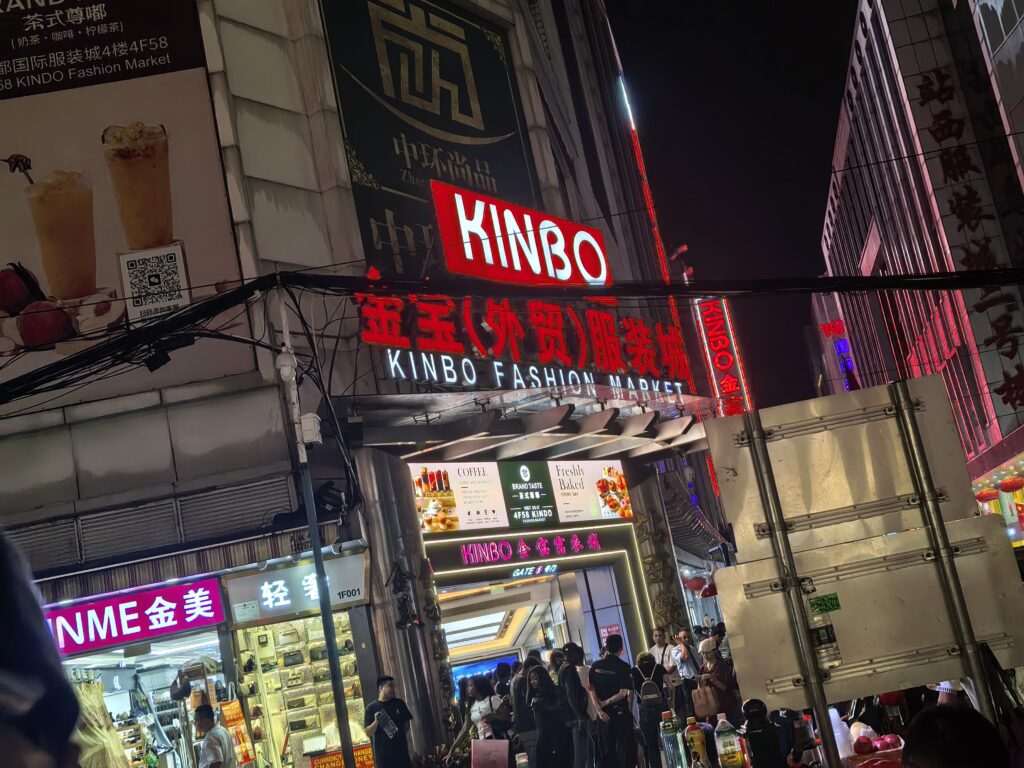
| Kinme / Kindo / Kinbo (金美 / 金都 / 金宝) | Zhanxi Road area (站西路) | Trendy brands and high-street menswear across interconnected buildings, with a Korean clothing floor and a Taiwanese floor | Partly — the top pick for boutique buyers and online retailers in this area, but for trends and reference rather than development |
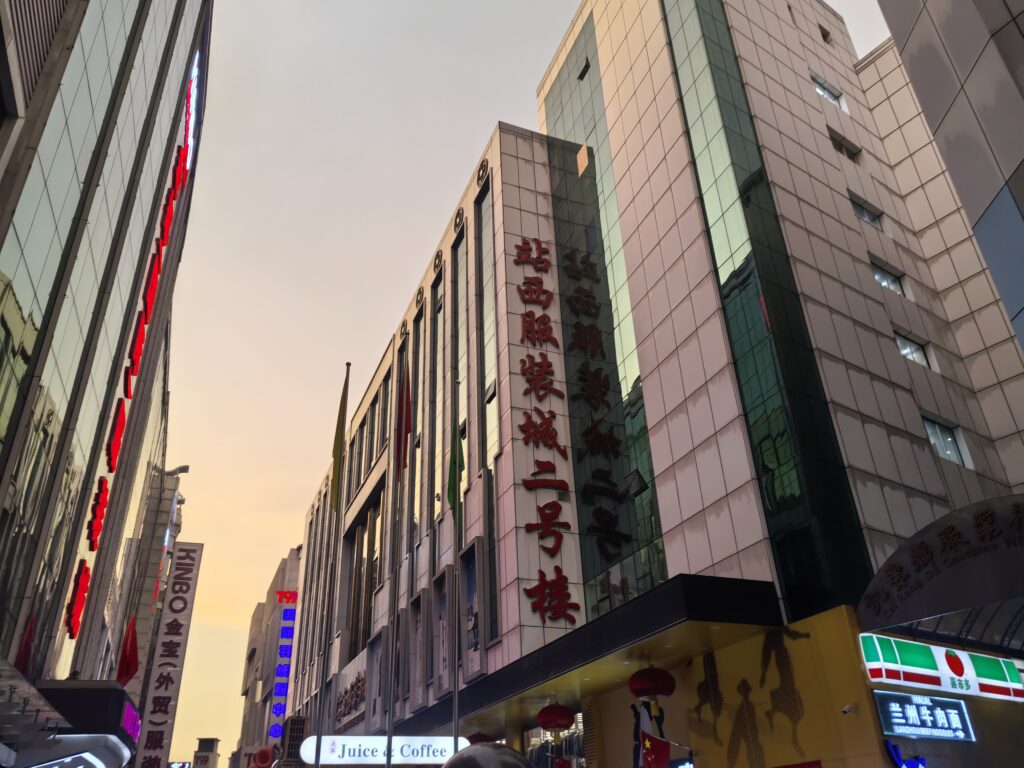
| Zhanxi Clothing Wholesale Market (站西服装城) | Zhanxi Road area (站西路) | Largely factory-direct: athleisure, denim, sweatshirts, knitwear and export-oriented outerwear | Partly — factory-direct stalls, but the area is best for trend reading and reference, not for reorders |
| Baima Garment Market (白马) | Station front (站前路 / 站南路) | Mid-to-high-end womenswear and knitwear; the home of brands such as GIRDEAR and GLORIA | Partly — the benchmark for fit and price in this area |
| Hongmian International Fashion City (红棉国际时装城) | Station front (站前路 / 站南路) | Ladies' fashion across a very wide range of shops and styles | Partly — a good place to buy better quality at a balance of quality and price |
| Yima Clothing Market (壹马服装城) | Station front (站前路 / 站南路) | Womenswear sold wholesale and retail side by side, with a wide style range | Partly — a good first stop to read what the area carries before committing to one building |
| Tianma Clothing Market (天马服装城) | Station front (站前路 / 站南路) | Menswear, womenswear and childrenswear mixed in one building | Partly — small, tightly packed stalls let you see a lot of stock in a short walk |
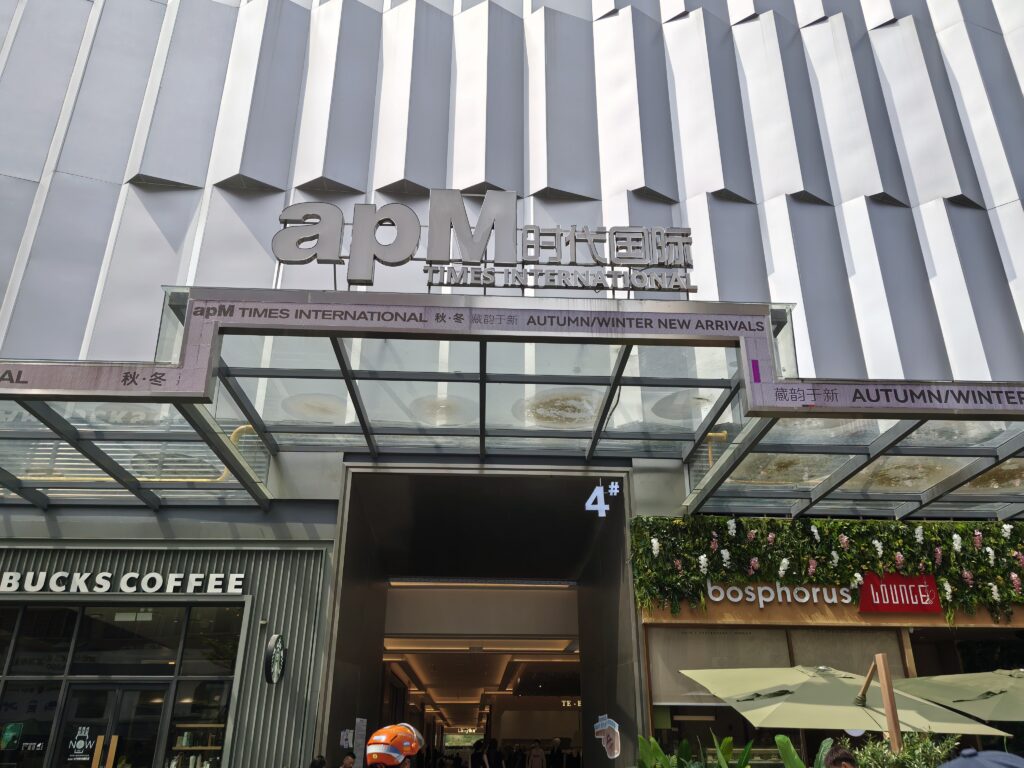
| APM TIMES (apM 时代国际) | Station front (站前路 / 站南路) | Young womenswear, often shown with matching accessories, shoes and bags | Partly — branded-look goods concentrate upstairs, so read the lookalike warning first |
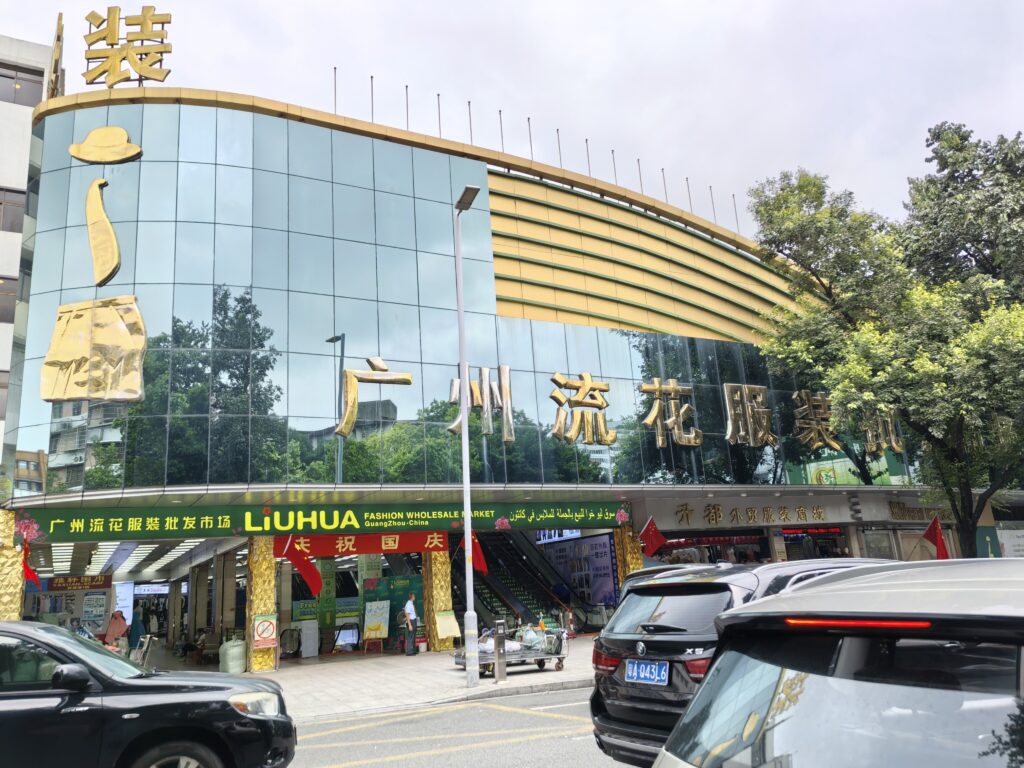
| Liuhua Clothing Wholesale Market (流花服装城) | Station front (站前路 / 站南路) | Cheap T-shirts and polo shirts, mainly for overseas buyers from the Middle East and Africa | Partly — mostly wholesale, and it rarely sells one or two pieces |
| Fuli Building (富俪大厦) | Station front (站前路 / 站南路) | Men's polo shirts, T-shirts and shirts, plus some sportswear | Partly — mostly export, with a mix of stock and made-to-order |
| Changjiang Clothing Wholesale Market (长江服装城) | Station front (站前路 / 站南路) | Men's bottom wear — trousers, denim jeans and shorts, including plus sizes | Partly — export-oriented |
| Youyi Trouser Market (友谊裤都) | Station front (站前路 / 站南路) | All bottom wear — trousers and shorts in many fabrics, including jeans | Partly — a single-category building, so go only if bottoms are your focus |
| Jinxiang Underwear Wholesale Market (金祥内衣批发市场) | Station front (站前路 / 站南路) | Bras and briefs, loungewear and home wear, thermal sets and hosiery | Partly — worth a dedicated visit if underwear is part of your range |
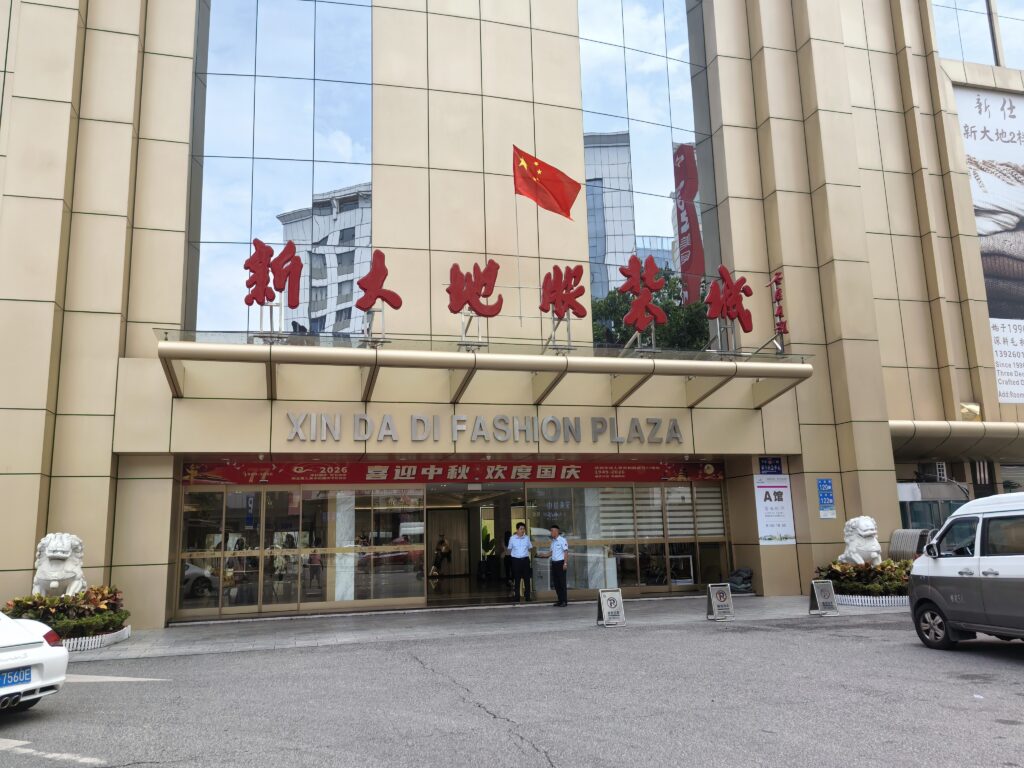
| Xindadi Garment Market (新大地服装城) | Station front (站前路 / 站南路) | Quality sweaters and knitwear on a custom-order basis, with no stock to retail | Partly — but if you are building a knitwear line it is the best stop in this cluster, since it works on custom orders |
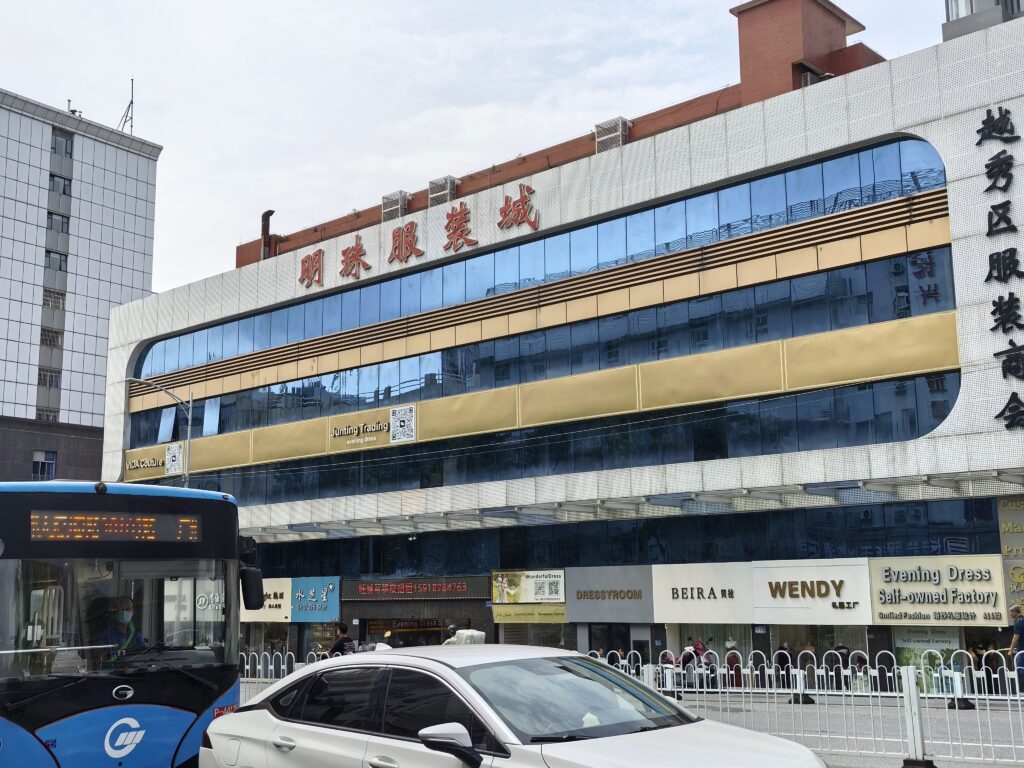
| Mingzhu Clothing Market (明珠服装城) | Station front (站前路 / 站南路) | Evening dresses and bridal-style gowns cut for export | Partly — order-based, so allow production time rather than expecting to carry goods home |
| New China Plaza (新中国大厦) | Shisanhang area (十三行) | The anchor of Shisanhang: fast-fashion womenswear, with better quality from the 4th floor up | No — trends only, no development; floors 1–3 open about 6am–1pm and the upper floors about 8am–4pm |
| Shisanhang International Fashion City and the cluster (十三行国际时装城 / 红遍天 / 东方红 / 光扬 / 龙城 / 耀盛) | Shisanhang area (十三行) | Mid-to-low mass-market fashion, knitwear, casual wear, menswear and export stock — the oldest wholesale cluster in the city | No — trends only, no development; quality and prices sit below New China Plaza |
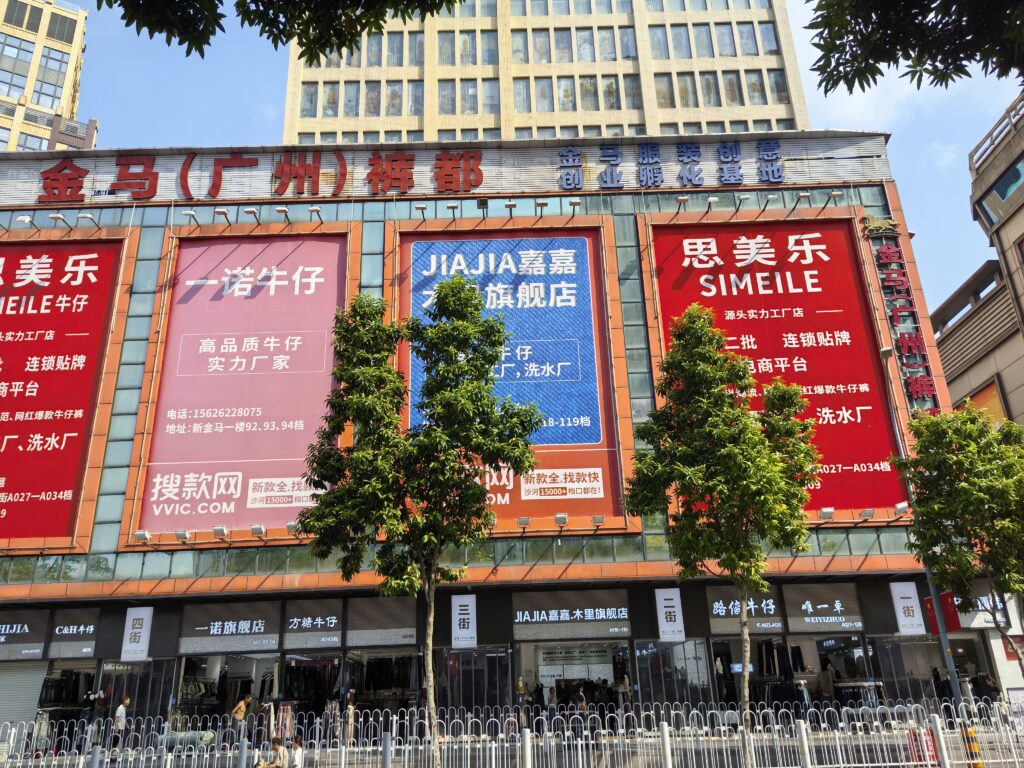
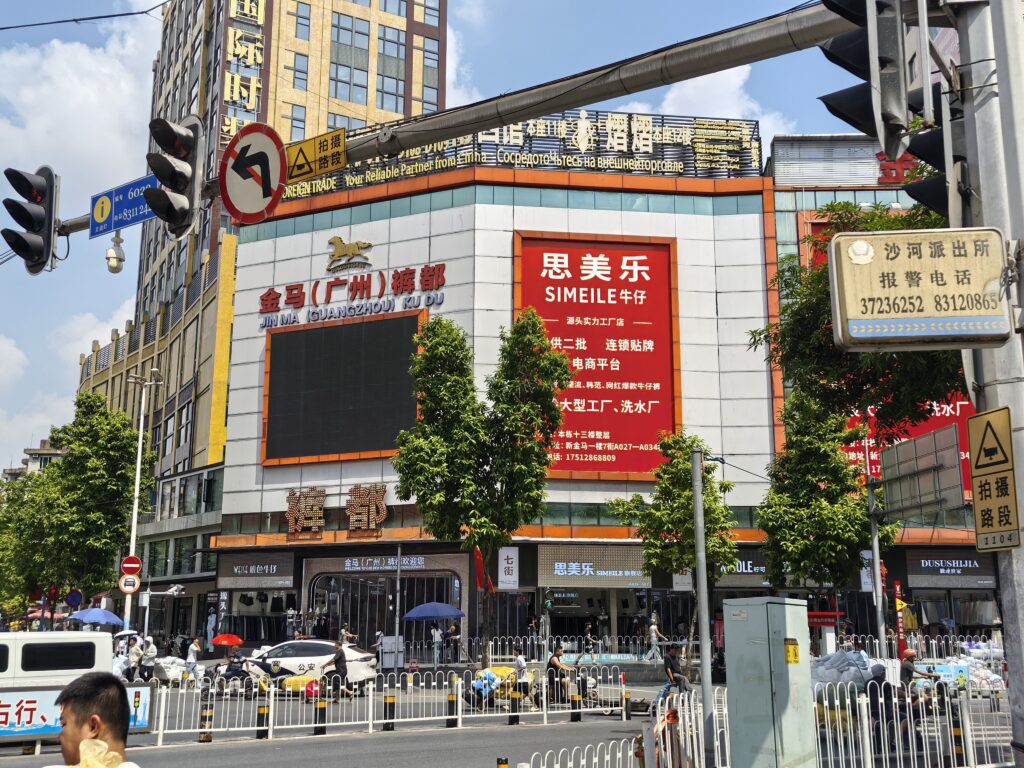
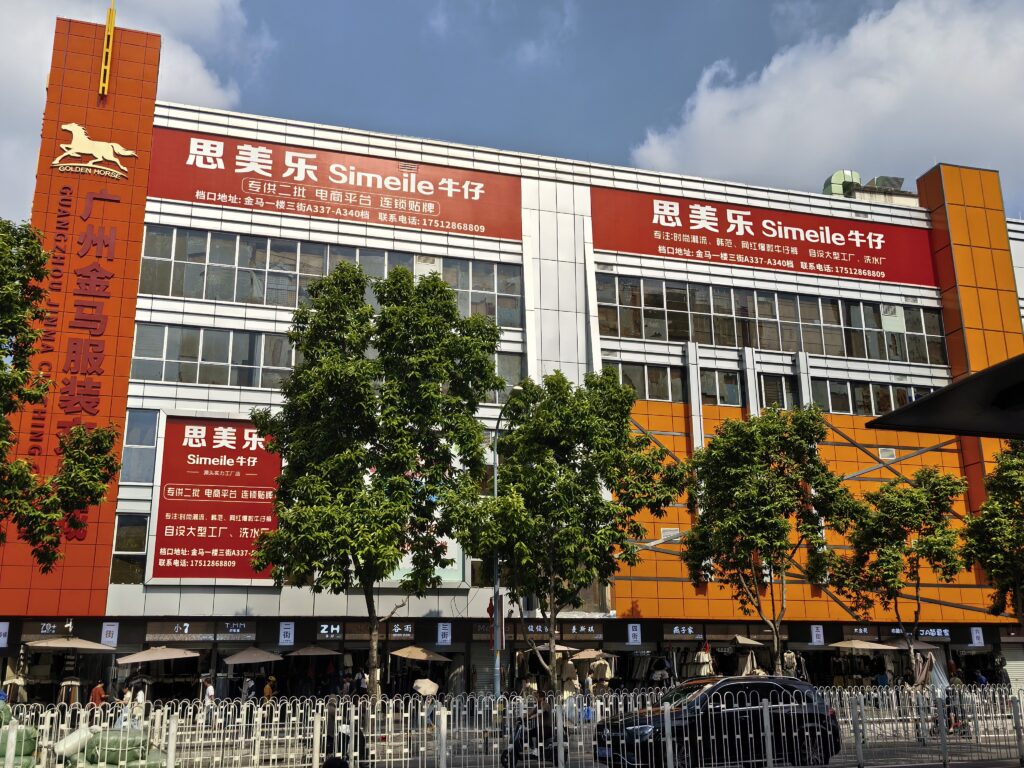
| Wanjia / Jinma / Shahe Plaza / Yangcheng (万佳 / 金马 / 沙河广场 / 羊城) | Shahe area (沙河) | The cheapest bulk basics and the densest concentration of womenswear, plus the e-commerce batch buildings | No — price-led with thin quality control |
| Zhongshan Ba Road — Litang and Lijing Building (中山八路一带) | Zhongshan Ba Road (中山八路) | Childrenswear, from baby to teen, across a cluster of small markets | Yes if you are building a kids' line — it is the specialist area |
| Xintang International Denim City (新塘国际牛仔城) | Xintang | Denim only — jeans, jackets and skirts, in China's largest denim production base | Yes for a denim brand — it is about an hour from the station district |
| Changgang Stocklot Market (昌岗尾货市场) | Stocklot markets (尾货) | Surplus and clearance women's wear, generally by the single piece | No — leftovers, not a supply chain; it opens around 9am–6.30pm |
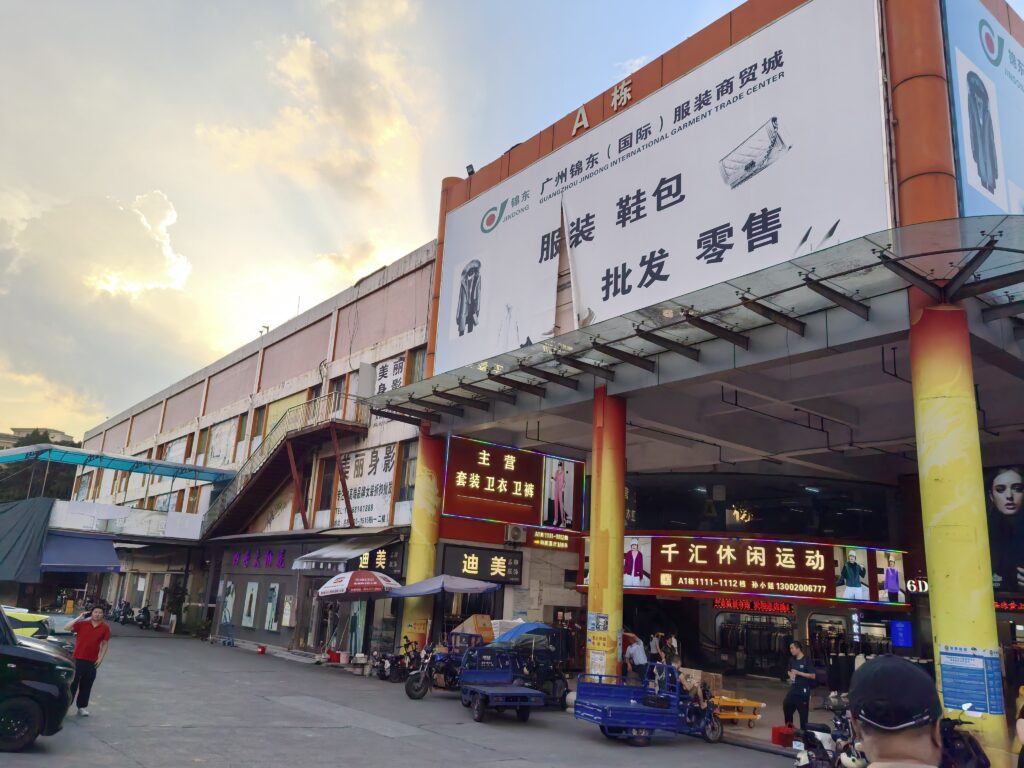
| Jindong / Guangda International Market (锦东 / 广大) | Stocklot markets (尾货) | Special-offer apparel across leisure, sport, fashion, children, underwear, sweater and denim | No — stocklot only, in Shijing, Baiyun |
| Weiguo Apparel Stocklot Market (伟国) | Stocklot markets (尾货) | The largest professional stocklot market in South China — apparel, footwear, leather goods, underwear, socks and jewellery | No — stocklot only, on Shicha Road, Baiyun |

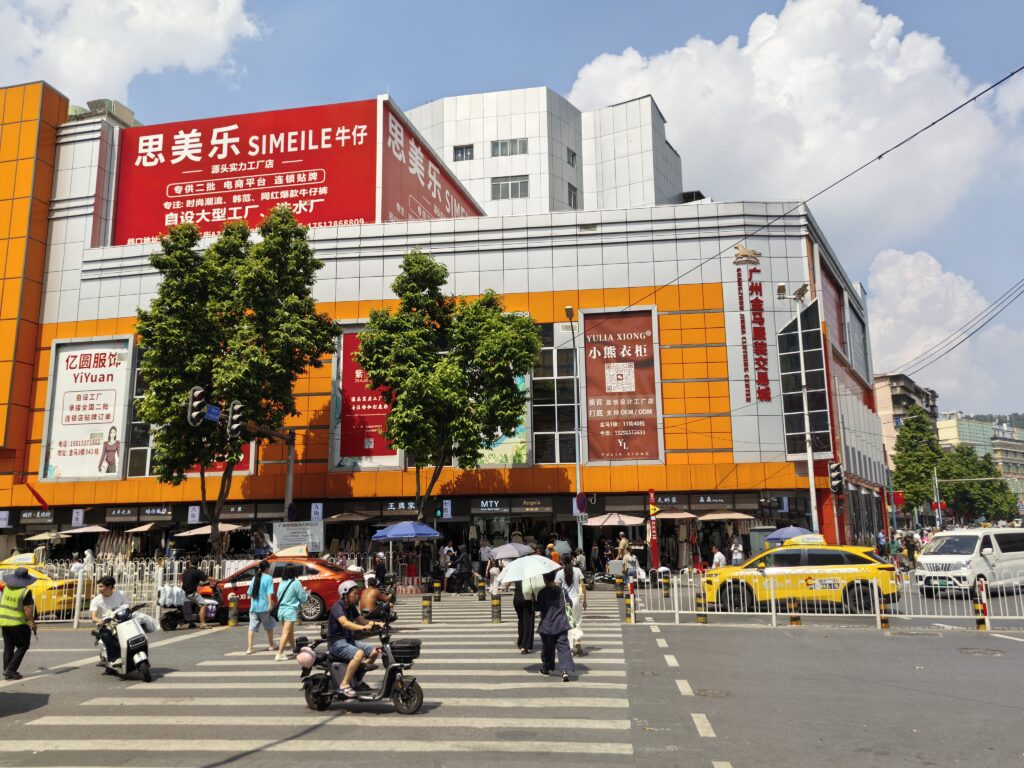
Address: Zhanxi Road, NO.57 Zhanxi road, yuexiu district. Guangzhou, In Chinese name: 广州市越秀区站西路57号
In the north part near by Guangzhou Railway station, more close to Guangdong province bus station. Because the transportation is very convenience, countless customers come and go here everyday. There are many Wholesale buildings:
Kairongdu is mainly an export and wholesale building. Most stalls work on bulk and made-to-order orders for clients across Asia, Korea, Europe and beyond, and rush orders can often be turned around in about a week.
Only a handful of stalls sell single pieces to walk-in buyers, and they charge a marked-up retail price for it. Floors are not zoned by product — stalls are mixed throughout the building, mostly clothing with a smaller number of shoe, bag and accessory stalls in between. A minority of stalls carry more distinctive styling and price accordingly.
One thing to know before you go: quite a few stalls lean on brand-inspired styles, so keep anything logo-heavy out of a container bound for Europe or the US — the risk lands on the importer, not the market. Stalls open from around 10:00 to 19:30 daily.
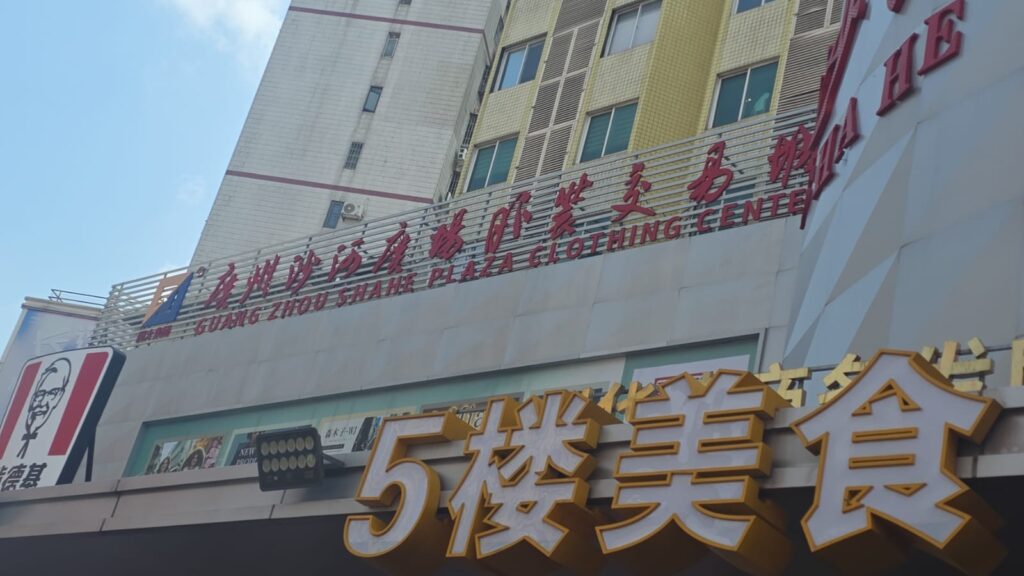
Located in huanshi west road, Mainly wholesales young men’s clothes and women’s clothes for Japanese, Korean, Hong Kong, and Taiwan styles. This market they can retail, but need extra money, you can bargain. You can sorted in different colors, styles and sizes in wholesale price. 1st floor are generally private label brands. second and third floors price are higher than 1st floor, clothing are more fashion and good quality. 4-5th floors are selling men’s wear, you can see the hot selling designs with various fabric and quality. 6th floor is dining area, you can take a good rest here with a big meal, almost anything you want to eat can find, you can try some Chinese food here.
It was reopened after improved renovation in 2018. It was know as [Kowloon Shoe City] before. The clothing here is similar to Huimei international, many high grade clothes you can find in same style. You can spend the whole day in those clothes market, there are many stores, easily get lost, just need time to go around, enjoy it.
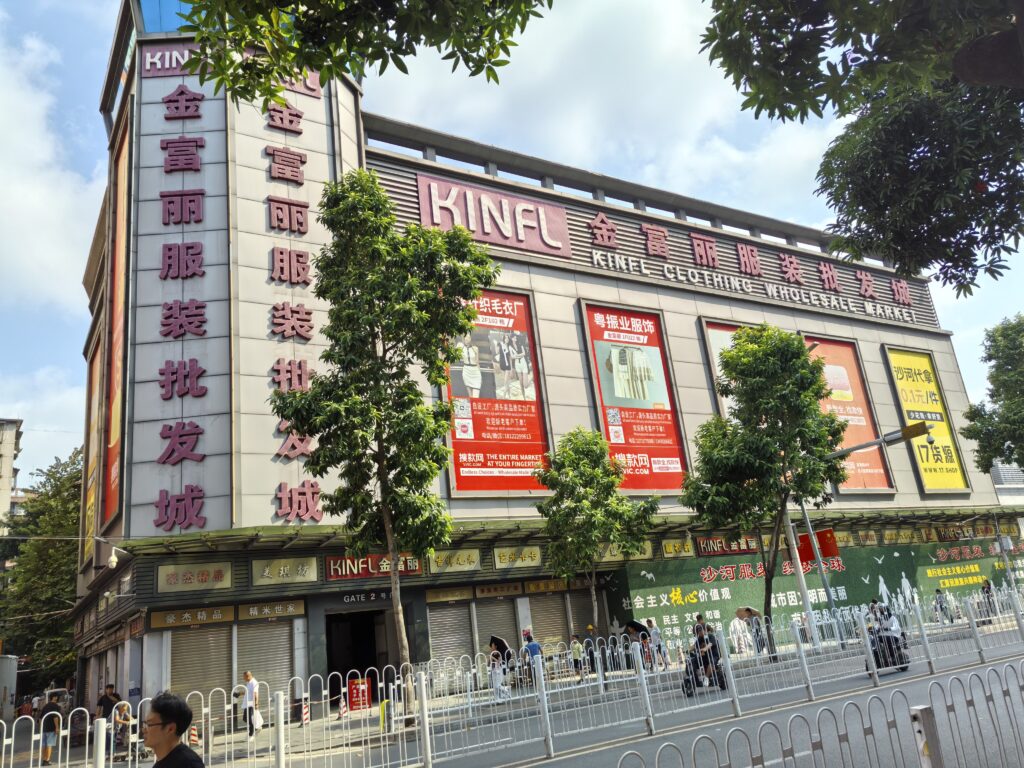
Located in the same building with interconnected interiors; a hub for trendy brands and high-street menswear from across the country, and the top choice for sourcing by boutique buyers and online retailers.
Jinbao(Kinbo) Wholesale Clothing market 金宝服装城
More than 300 shops on 1st and 2nd floors, mainly selling leisure clothing and fashionable foreign brands. The third floor is Korean clothing street, dealing with high-end Korean style apparel. The fourth floor is a Taiwanese shopping mall, where all kinds of clothing, garment accessories and gadgets popular among young women.
Jindu(Kindo) Wholesale Clothing market 金都服装城
Jindu (Kindo) is the menswear building of the three. Eight floors, roughly 800 stalls, rebuilt in 2011. The lower floors trade openly — suits, jackets, down jackets, shirts and knitwear — sold by the piece as well as by the dozen, with the friendlier prices and clearance stock on the third and fourth floors. Floors five to seven are still stalls rather than offices: they hold samples, take orders and keep no stock, with a minimum of roughly five pieces per style. Most stalls open after 10:00 and close around 20:00. Expect a large share of lookalike product; if you need your own label, buy unbranded and have it made to your specification. Floor-by-floor detail, opening hours and the No. 57 building confusion are in our Kindo Market Guangzhou guide.
Primarily factory-direct operations: athleisure, denim, sweatshirts, knitwear, and export-oriented outdoor apparel.
The brand GIRDEAR, GLORIA come from here. G entrance of Guangzhou Railway station can arrived, No. 16 Zhannan road, Yuexiu area. Baima establish in the year of 1993, around 60,000 square meter, total 10 floors, basement level is parking area, 1st -4th floor are the selling markets, 5th-9th are mainly the office. Guangzhou Baima Garment Market is the medium to high end garment market with the most standardized management and the largest trading volume in Guangzhou.
Mostly ladies clothes, vast array shops and styles, if you want to buy better quality here is balance on quality and price.
Yima is a womenswear building in the same cluster as Baima, selling wholesale and retail side by side. The style range is wide — basics and dressed-up pieces sit on neighbouring stalls — so it is a good first stop if you want to read the breadth of what this area carries before committing to any one building.
Tianma mixes menswear, womenswear and childrenswear in one building. The stalls are small and tightly packed, so the aisles feel crowded, but that also means you can see a lot of stock in a short walk.
APM TIMES targets young womenswear, and stalls here usually pair clothes with matching accessories, shoes and bags so you can build a whole look in one visit. The upper floors are where the branded-look merchandise concentrates — read the lookalike warning later in this guide before you buy anything with a logo on it.
If you are looking for cheap clothing, specially t shirts and polo shirts, then you must take a look at Liuhua, Mostly for wholesale, need extra cost on retail(usually they don’t sell 1-2 pieces). They are doing foreigner business. Clients from Middle east and Africa mostly. The clothing factories are from Puning, Jieyang city.
This building selling men’s wear, Polo shirts, t shirts and shirts, some sports wear. Mainly for export, some have stock, some need order.
This market also for export, mostly men’s bottom wear, trousers, denim jeans short, denim long pant, plus size men’s trousers.
Here you can find all bottom wear, main products are trousers and shorts made in different types of fabric. You can buy jeans pant here also.
Jinxiang is the underwear stop in this cluster: bras and briefs, loungewear and home wear, thermal underwear sets and hosiery. It is worth a dedicated visit if underwear or basics are part of your range.
All kinds of underwear, home clothes, swimwear and stockings.
This wholesale market is working on custom order, they do not have stock to retail. if you are looking for quality sweater and knit wear, this market is your best choice. Those sweater factories in Dalang town, Dongguan city and Waisha town, Shantou ciry. When i just graduate from school, the first job I worked here as salesman for one year, that is why I’ve been in the garment industry for over 10 years. This market are doing international business, their products are selling to the world. You can hire a export agent to handle this, Many Italy sweaters come from this market(Chinese wholesale in Italy).
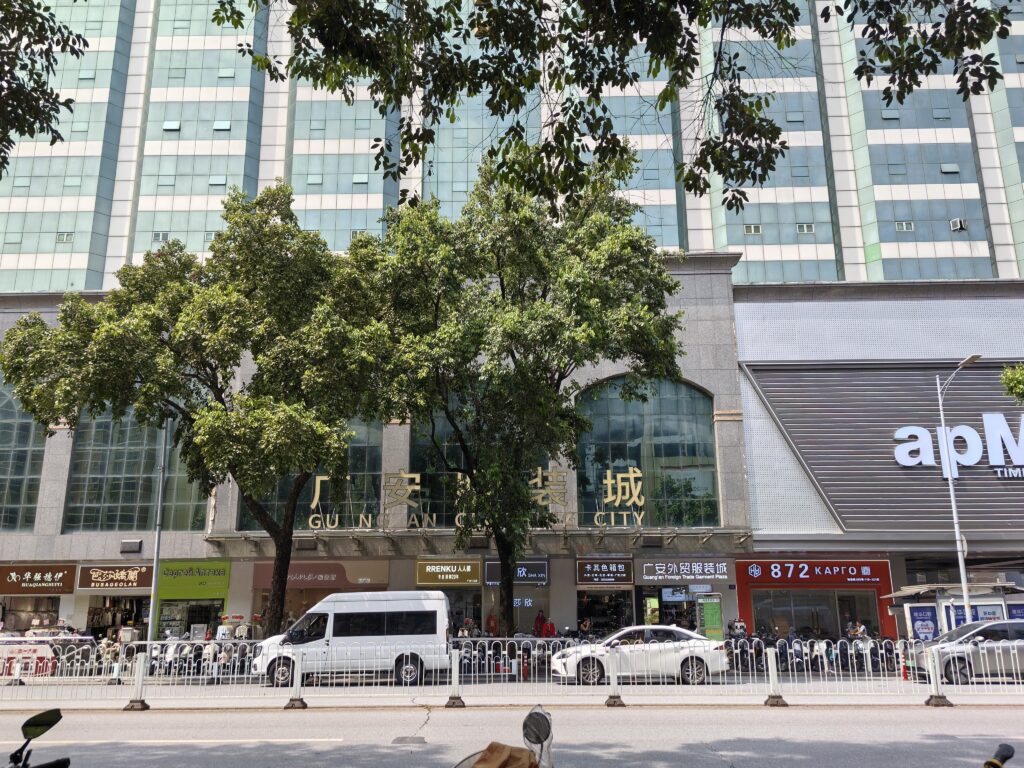
Guang’an is a mixed building rather than a category one — a bit of everything, with a limited number of stalls and little foot traffic. Treat it as a quick walk if you are already nearby, not as a primary destination.
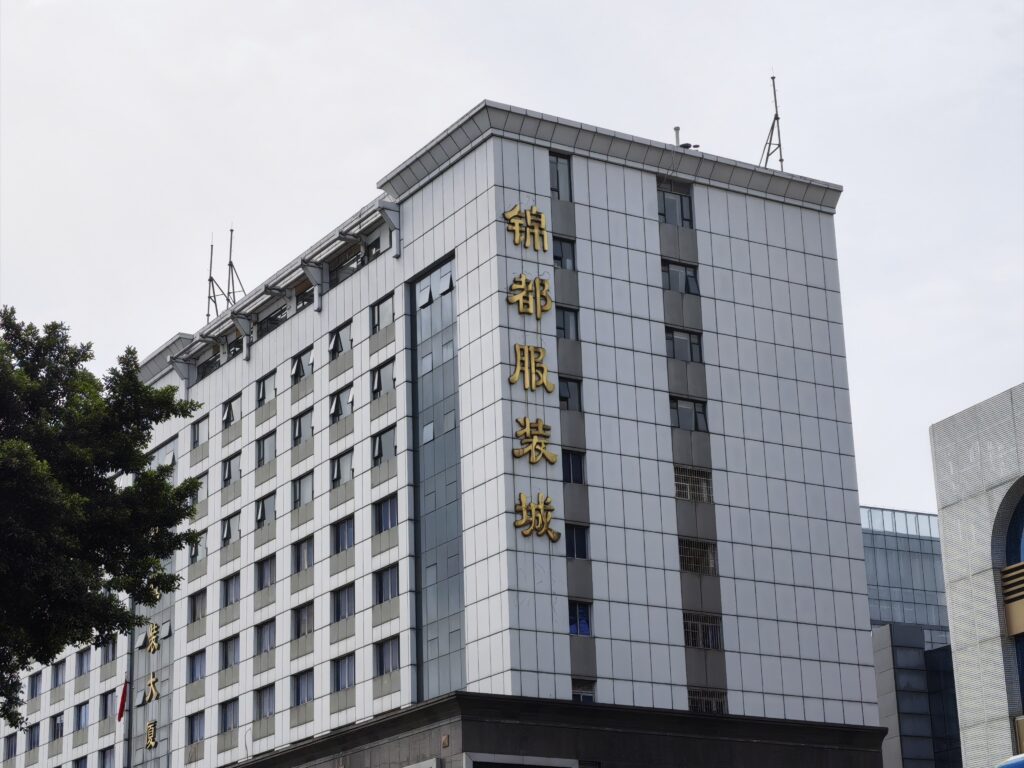
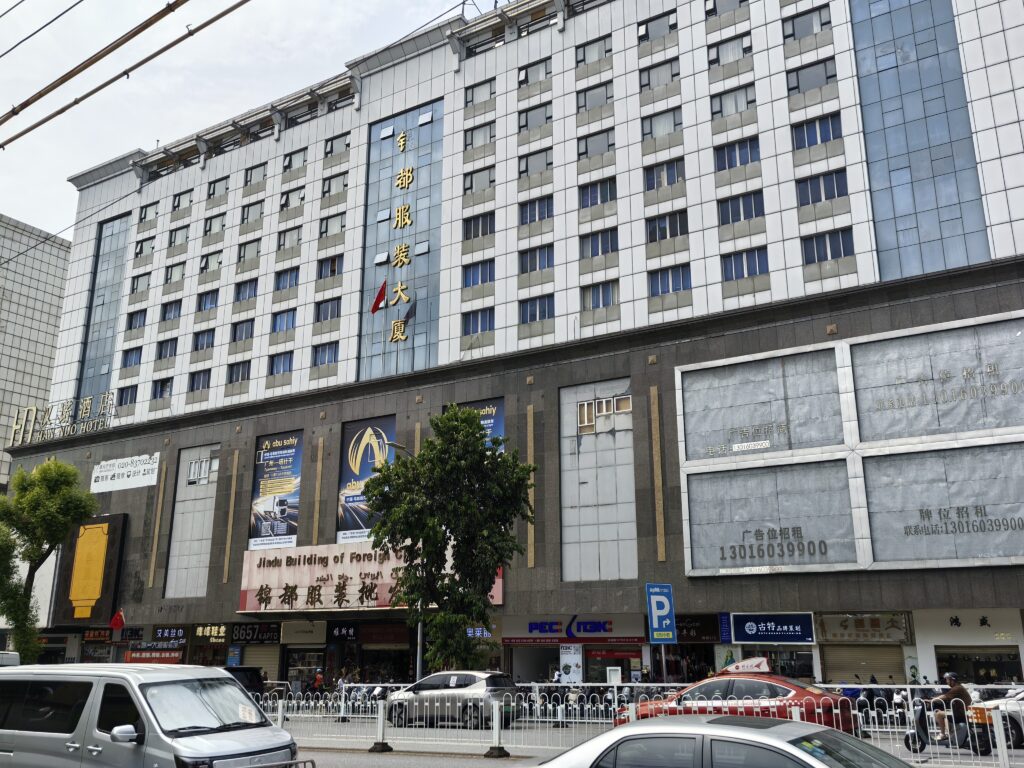
Jindu is similar to Guang’an next door: mixed merchandise, few stalls and little foot traffic. It is not the Kindo building in the Zhanxi Road area — the two names are easy to confuse, so check the address before you set out.
Mingzhu specialises in evening dresses and bridal-style gowns, cut for export styling. Much of the stock is order-based rather than off the shelf, so treat this as an order trip and allow production time rather than expecting to carry goods home the same day.
New China Plaza is the anchor of Shisanhang and famous as a dawn market. The stalls downstairs are tiny — most around five square metres, packed shoulder to shoulder — and they have traditionally opened around 6am, doing their serious trade before lunch while the rest of the city is still waking up. Hours have drifted in recent years and much of the market now winds down by around 4pm, so whatever else you plan in Guangzhou, plan Shisanhang for the morning.
The upper floors run on a later rhythm, opening around 8am, and they hold the better-quality end of the building: stalls taking bulk orders rather than grabbing passing trade. Expect crowds, narrow aisles and fast decisions — buyers here move quickly, and the good stock goes early.
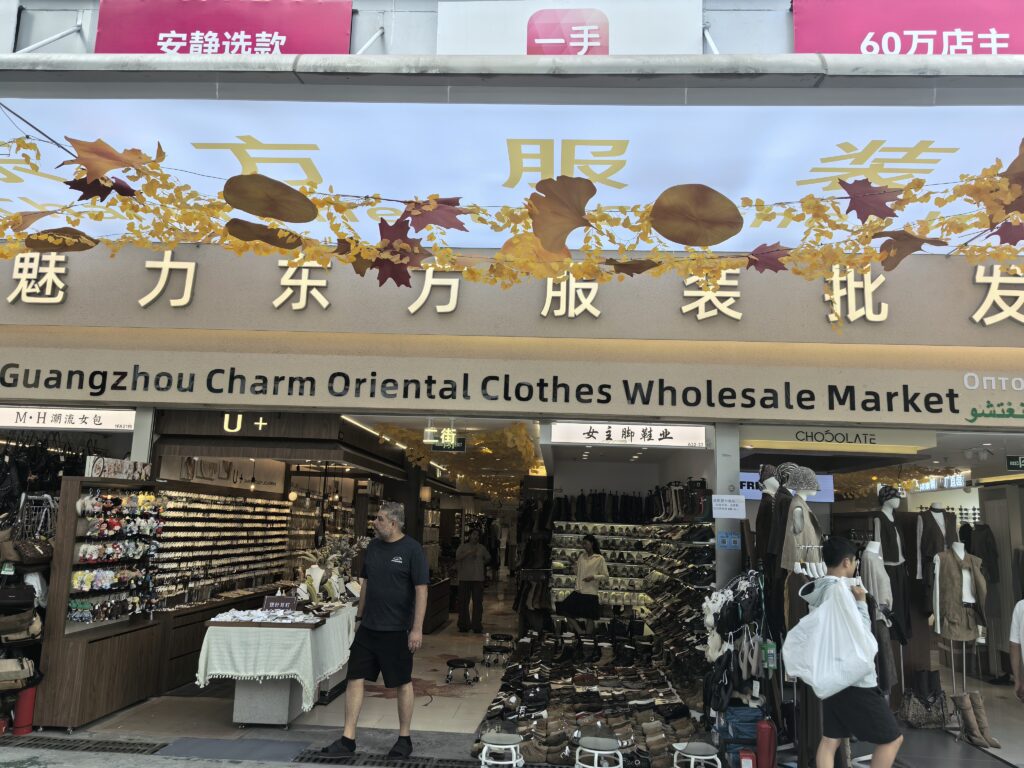
hongbiantian, dongfanghong, Guangyang, longcheng, Yaosheng, Shisanhang international fashion city quality is lower than New China plaza, lower price also, anyway you can find all kinds clothing here. It is the oldest clothing wholesale distribution center in Guangzhou. Tons of goods are imported and exported here every day, people come and go reaches thousands of people everyday. Mostly from China, also can see many foreigners from Asian and Southeast Asia.
An established complex of buildings known for mid low-range mass-market fashion, knitwear and casual wear, menswear, and export-stock merchandise.
The oldest cluster of street-facing stalls in Shisan-hang, featuring densely packed small stalls offering affordable men’s, women’s, and children’s clothing, as well as bulk wholesale options.
Cluster of shops specializing in knitwear, sweaters, denim, and men’s apparel; online wholesale marketplace supporting dropshipping (single-item fulfillment).
Shahe keeps different hours from the Zhanxi Road buildings, and the difference matters. Stalls here open around 8:30am — two hours earlier than Zhanxi — because the buyers who come here start earlier: the domestic e-commerce crowd that supplies taobao and pinduoduo shops comes in at dawn, orders fast and is gone by mid-morning. Most stalls are closed by around 5pm. Each stall sets its own time, and the ones with customers will keep going past that, but the buildings themselves cut the power at around 8pm, so after that nothing opens no matter what the sign on the door says. Plan Shahe for the morning, not the evening.
The most popular anchor building in Shahe; Jinma consists of two towers: New Jinma and Old Jinma.
Old Jinma — the trouser building — concentrates on lower-body garments: jeans, skirts and similar pieces, mostly womenswear on the ground floor. The floors above are e-commerce and dropshipping warehouses rather than shops, so this visit is short.
New Jinma is a womenswear building from top to bottom, with many very small stalls packed closely together — the densest womenswear concentration in the Shahe area.
Shahe plaza clothing center 沙河广场时装交易城
Shahe plaza is the new clothing market compare to other market surrounding. Total 5 floors, top 5th Floor are restaurants. 1-4th Floor are the clothing markets. The price here is lower than other buildings, all types of women clothes. You can find same designs cheaper here.
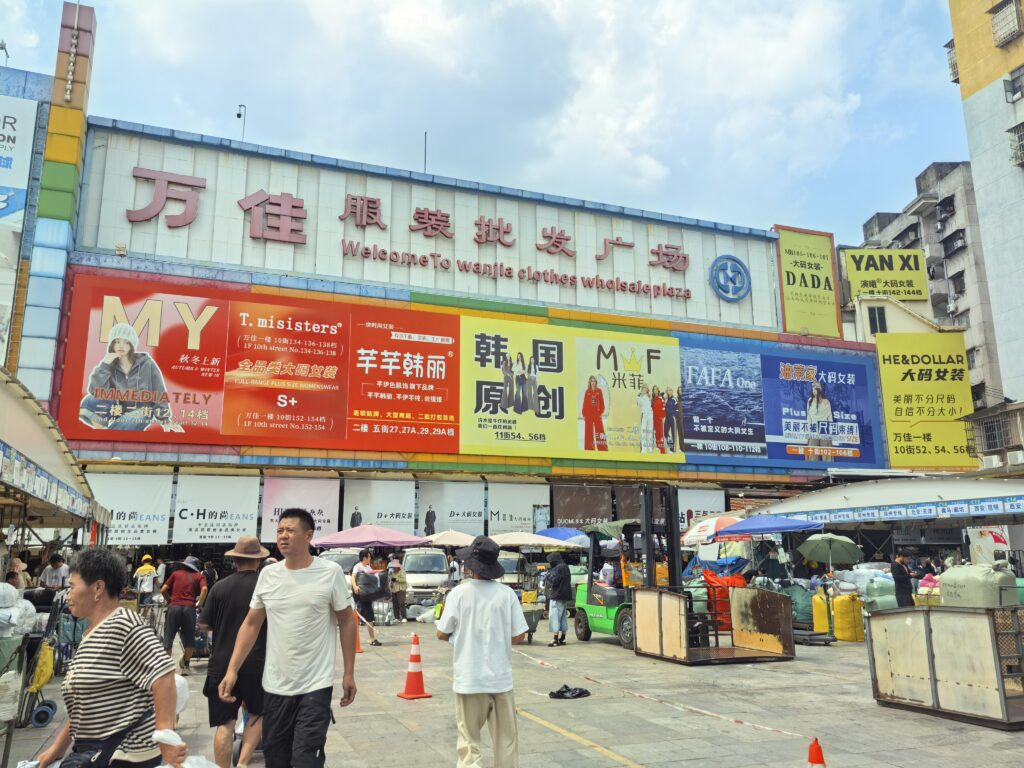
Wanjia clothes wholesale plaza万佳服装批发广场
The most fashion and trending designs in the market. Most of the foreigners like to order from this market. Total 3 floors, all types of women clothes.
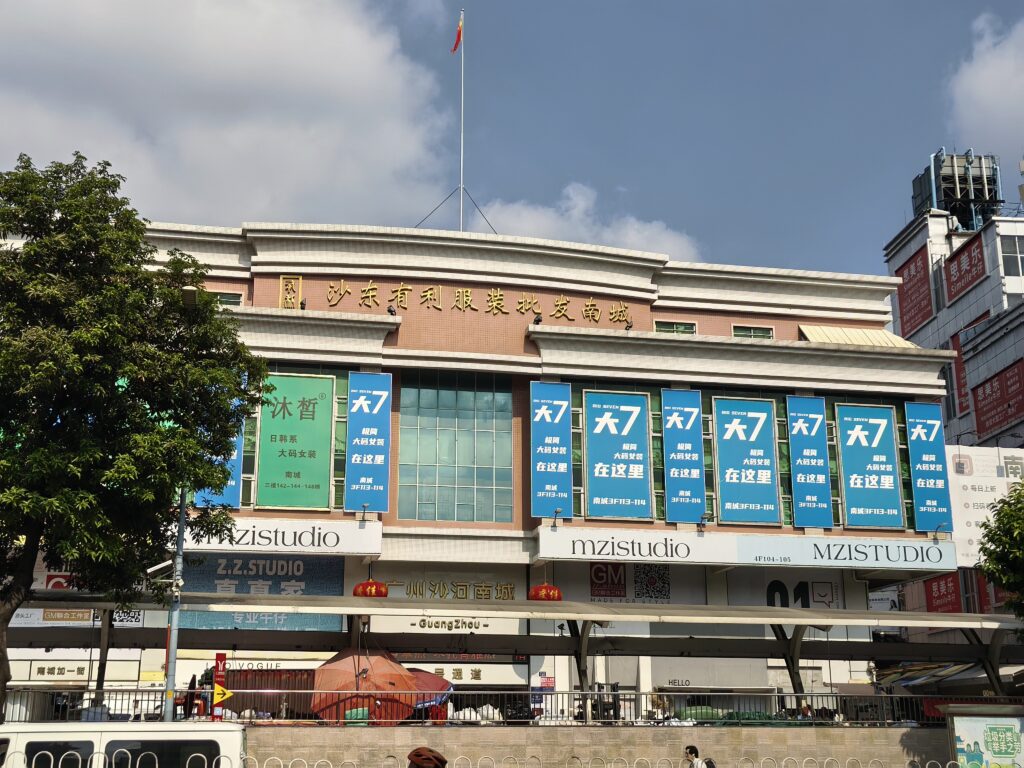
Shadong youli south city沙东有利服装批发南城
Mostly selling bottoms, 1st floor all denim jeans trousers. second floor mostly skirts.
Shadong youli South features mid-to-low-end casual wear for men and women, while North City offers low-end ready-to-wear children’s clothing; Changyun specializes in knitwear and casual wear, and Xintiandi focuses on fashionable women’s clothing.
Women clothing, accessory, shoe ect. Not specific items.
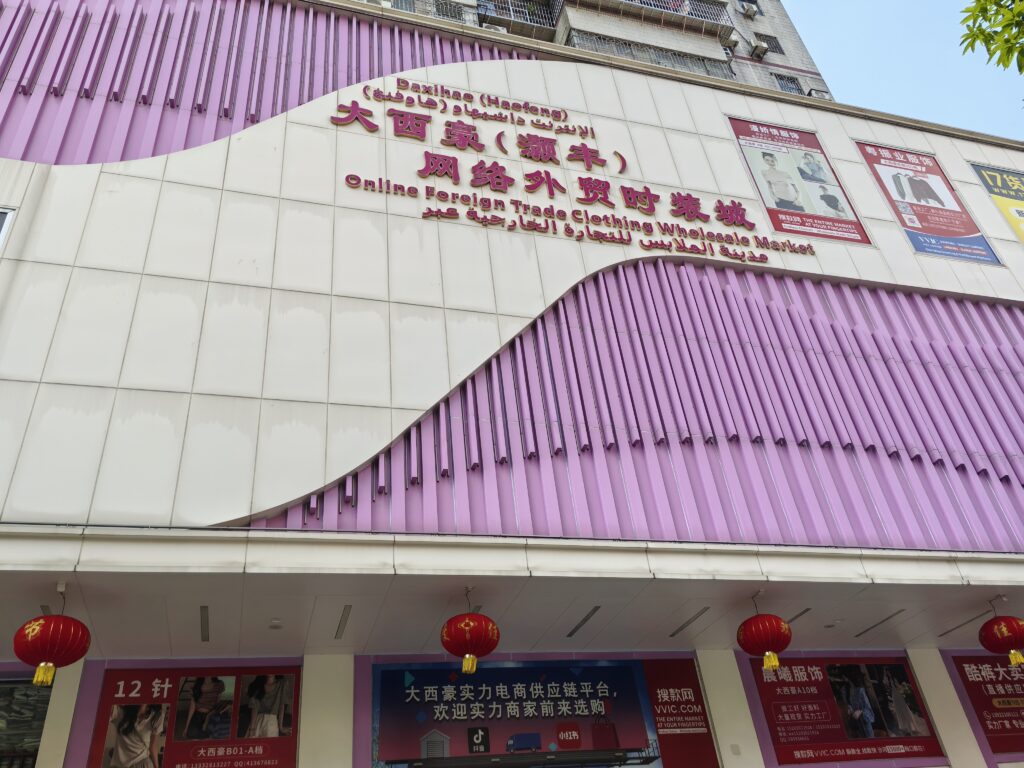
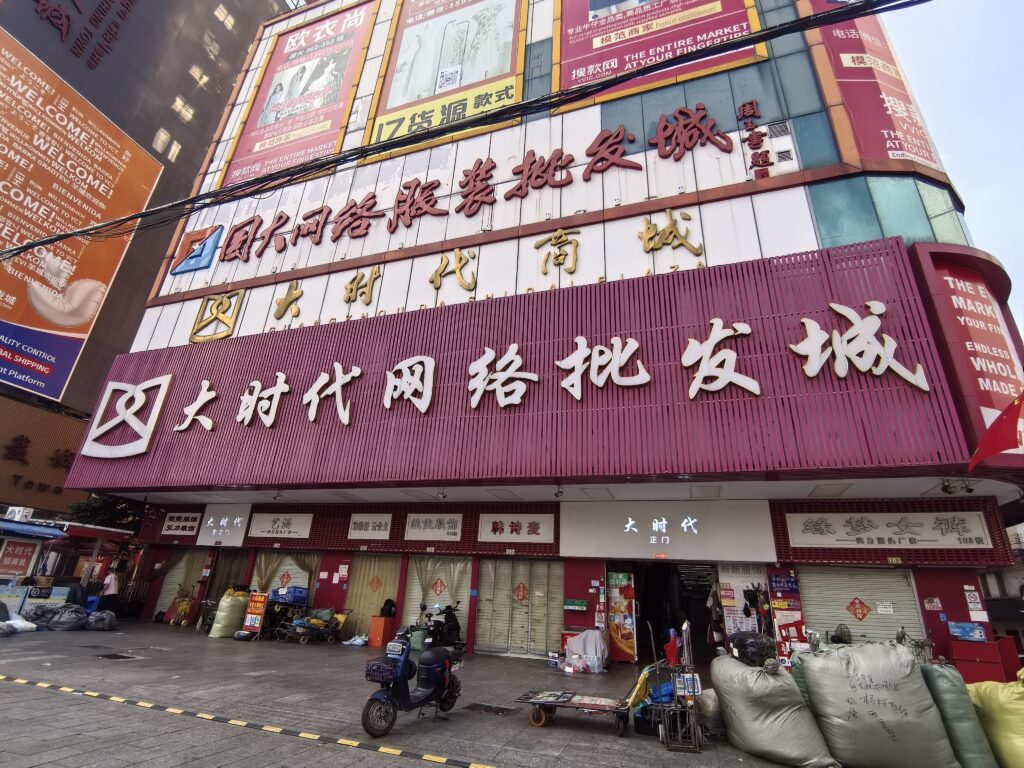
They make and sell in big quantity, low price fast turn around time this way to run the business, you can see the same design everywhere. Even they do e-commerce like Ladies Street, Daxihao market, mostly selling to China online clothing stores like taobao and pinduoduo. Most e-commerce and drop ship business are buying from here, one day can sell thousands of pieces.
Specializing in supply for e-commerce and live streaming: online wholesale of women’s clothing, Korean-style women’s and men’s fashion, and fast fashion; Haofeng is one of the first buildings to obtain an online wholesale license.
After talking about adults, here we talk about children’s wear, Zhongshan Ba Road in Guangzhou specializes in wholesale children’s clothing.
The Zhongshan ba Road is located in the downtown area, facing the Zhongshan 5th Road in the east, the city ’s largest passenger and cargo transportation ground, the Pearl River Bridge, the Guangfo Highway, the Xijiao Station, and the tram terminal in the west.
Taking Litang, Lijing Building and surrounding commercial buildings as the main wholesale markets, the daily traffic flow is similar to Guangzhou Railway Station.
The jeans in the town are exported to countries and regions such as Hong Kong, Thailand, the United States, and the European Union. Xintang Town has more than 2,600 denim clothing and related enterprises, producing 2.5 million pieces of denim clothing every day, accounting for 60% of the country’s total production. It is China’s largest denim clothing industry base.
Address: Jinchang Building, Changgang Road, Haizhu District, Guangzhou (behind Yongle Electric). Opening time from 9:00AM-18:30PM.
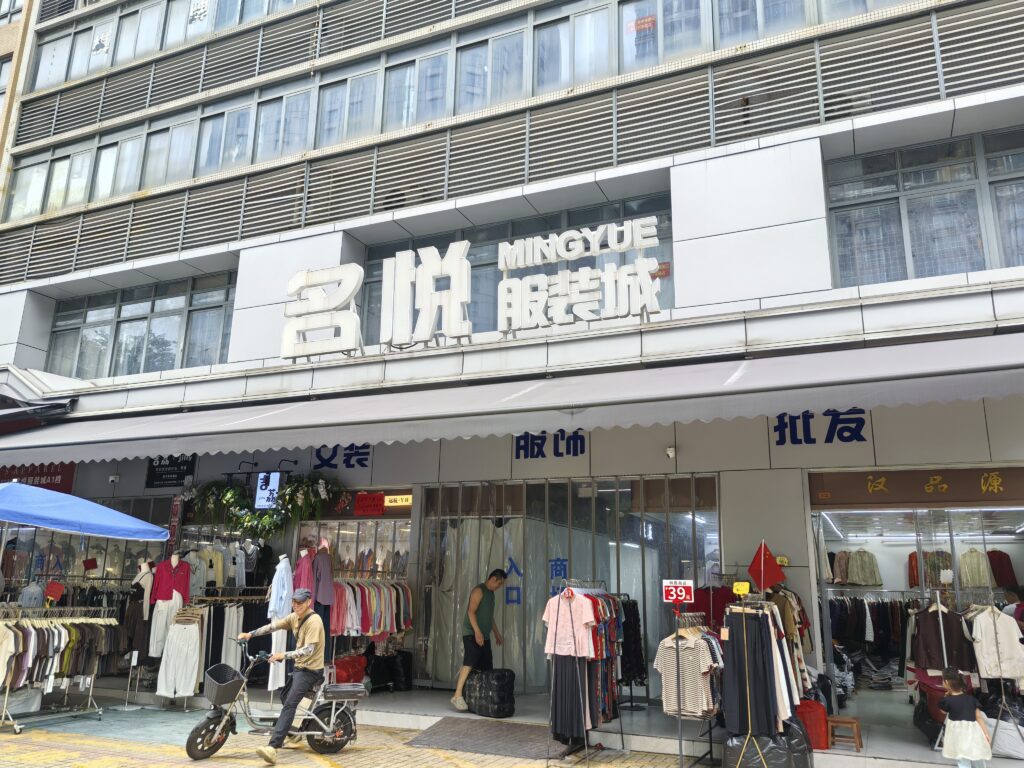
Changgang stocklot Wholesale Market, mostly these 2 buildings,Haiguan market is key trading hub海冠服装市场 and Mingyue clothing city名悦服装城 are the second largest stocklot women’s wear wholesale market in Guangdong. A good place to buy really cheap clothing here, different levels from $1.5 dollars shorts, $3 denim jeans, generally selling from 1 piece. Here is not as crowed as Shahe and other markets in Guangzhou, you can choose slowly and pick up what you want. The quality here is mixed, any quality have you need to check by yourself. Clients are mostly retailer and Street vendor.
Address: No. 1, Huangjin Road, Shijing Street, Baiyun District, Guangzhou. Jindong is the most extensive radiation and the most complete business varieties in South China.
Jindong International market is a professional apparel wholesale market that specializes in special offer clothing. The market is mainly wholesale, also retail need extra cost, have various clothing leisure, sports, fashion, children, underwear, sweater and denim.
Address: No. 370, Shicha Road, Baiyun District, Guangzhou. It is the China stocklot clothing distribution center and the largest professional stocklot wholesale market in South China. Offer apparel, footwear, leather goods, underwear, socks, jewelry ect.
Several buildings in this cluster — Jindu (Kindo), Jinbao (Kinbo) and Jinxiang among them — have a long-standing association with lookalike versions of branded goods. A large share of first-time visitors get pulled in here, so it is worth being blunt about why a brand owner should walk straight past.
Reselling lookalike or counterfeit goods is illegal in the United States, the European Union, the United Kingdom and Australia. Customs authorities seize those shipments, and marketplace platforms suspend seller accounts over them with no meaningful appeal. There is also no route from a counterfeit stall to a real business: vendors there sell garments that somebody else already made, they will not develop a pattern for you, they will not sign an NDA, and they cannot supply a consistent reorder next season.
Enforcement in this district has tightened in recent years and buildings have changed their tenant mix as a result, so any list of “which floor sells what” ages within months. Treat it as a warning sign, not a shopping tip.
If your goal is to sell your own designs under your own label, the lookalike trade is a dead end — commercially as well as legally. The buildings worth your time are the ones below.
A wholesale market sells you garments that already exist. A factory makes garments that do not exist yet. That single difference is why brands eventually stop shopping and start manufacturing — usually after one or two seasons of trying to build a collection out of market stock.
Here is what you cannot get from a market stall, however good the stall is:
This is the point where most of the brands we work with make the switch. If your first order is going to be a real collection rather than a test of somebody else’s stock, the practical route is a production partner who will develop the garment from your own pattern and run it at a workable minimum — development, fabric, trims, pattern and sample all handled before a single production unit is cut. For custom garments made from your own design that starts at 100 pieces per style.
If you are still at the stage of assembling ideas, references and a budget, our guide for clothing manufacturer for startups walks through the first order step by step. If your plan is to put your own label, hang tags and packaging on the garments, that is private label manufacturing. If you need fabric and trims sourced and matched, that is part of fabric sourcing and production services. For knitwear specifically — gauge, yarn and minimums — see custom knitwear manufacturing.
And if what you actually need is someone on the ground in Guangzhou — buying fabric and trims, or picking up ready-made pieces from the markets on your behalf — that is a service we offer too.
Timing. Most markets open early and close early. Shahe is the earliest — stalls open around 8:30am and most are closed by 5pm, though the buildings keep the lights on until about 8pm. Shisanhang runs on a similar early rhythm and is busiest before 9am. The Zhanxi Road buildings are the late shift: stalls open from around 10:00 and stay until 19:30 or 20:00. Sunday is quiet and several buildings are closed.
Getting there. Guangzhou Railway Station (Metro Line 2 and Line 5) puts you within walking distance of the Baima, Liuhua and Zhanxi Road cluster. Shisanhang is reached from Cultural Park station, and the childrenswear area on Zhongshan Ba Road has its own station on Line 5. Xintang International Denim City is out in Zengcheng, roughly an hour from the railway station district — treat it as a separate half-day trip and go by car.
Paying. WeChat Pay and Alipay are effectively mandatory. Set them up before you arrive — international cards are not accepted at the vast majority of stalls.
Samples. Most stalls will sell you a single piece at a retail price rather than a wholesale one. Buy the samples; they are the cheapest market research you will ever do.
Language. Outside the export buildings, English is limited. A translation app and photographs of what you want work better than a script.
Shipping. Market-arranged shipping is convenient but rarely the cheapest. Get a quote from an independent freight forwarder before you commit.
What to actually buy here. Fabric, trims, reference garments and honest price benchmarks. If you are there for materials rather than finished stock, our guide to the Guangzhou textile market covers Zhongda properly.
Start with Baima and the Zhanxi Road cluster, both walking distance from Guangzhou Railway Station. They are the most organised, the easiest to navigate without Chinese, and they give you a reliable read on quality and pricing. Shisanhang and Shahe are cheaper and busier, but far harder to judge on a first trip.
Shisanhang is the most flexible, often selling from five to ten pieces per style and colour. Baima will usually go down to around thirty pieces. Nearly every stall will also sell you a single piece at retail price if you want a sample.
Physically, yes — you can buy garments and have labels sewn in. Commercially it is a different answer. You inherit the stall’s quality control, you cannot reliably reorder the same style, and you will not get the fibre composition, care labelling or safety testing documentation that US and EU retailers ask for. If your label matters, have the garments produced rather than bought.
For denim itself, Xintang International Denim City out in Zengcheng is the trade’s own centre — denim only, and roughly an hour from the railway station district, so treat it as a half-day trip. If you would rather stay in the city, the Shahe area has Meili Dongfang Denim City, a dedicated denim wholesale building.
Mostly not. Sunday is the quietest day and several buildings close entirely. Plan your trip Monday to Saturday, and be aware that some markets finish by early afternoon.
You need a payment app. WeChat Pay or Alipay linked to an international card covers almost every stall; cash is increasingly awkward and cards are widely refused. A Chinese phone number is not strictly necessary but makes Wi-Fi, apps and vendor contact far easier.
For a single short trip and a small order, an agent can save time and language friction. For a brand that intends to reorder, an agent adds a layer of cost without solving the underlying problem — which is that markets sell stock, not production. If you are heading toward your own designs, spend the money on sampling instead.
As soon as you want a garment that does not already exist, or the same garment twice. Markets are excellent for research and materials, and a poor substitute for a supply chain. Custom production from your own pattern starts at 100 pieces per style, with sampling in 7 to 10 days.